Call for Abstracts
Call for Abstracts
WADEM invites abstract submissions for the 24th Congress on Disaster and Emergency Medicine. The congress theme is: Research, Relevance, Resilience: Enhancing performance in disaster and emergency medicine for communities, responders, and ecosystems.
Submissions are encouraged across 14 categories that represent a wide range of themes related to disaster medicine, prehospital care, and the health aspects of emergency management and complex humanitarian crises. Select abstracts presented at the congress will be published in an online supplement to WADEM’s journal, Prehospital and Disaster Medicine (PDM), on Cambridge Core. Abstracts must have a proper ethics determination to be published in PDM.
The deadline to submit an abstract is 23:59 (CST – North America) on 1 November. For an abstract to be formally accepted, included in the program, and considered for publication in the supplement, the presenting author must be registered and paid to attend the Congress by 15 February 2027.
To submit an abstract for the congress, you will need to create an Oxford Abstracts (OA) account if you do not already have one, or log in to OA using a LinkedIn or Google account.

Abstract Submission Overview
Below is an overview of the submission process.
- Abstracts are to be submitted in English.
- The abstract should not use first-person pronouns such as "we," "our," or "I."
- The presenting author should be the first-named author on the abstract.
- Email correspondence regarding the abstract will be with the presenting author.
- Abstracts must not exceed 300 words (excluding the title, authors, and affiliations).
- Commercial presentations are not permitted.
- There is no fee for submitting an abstract.
- Abstracts should not contain any tables or figures. There will be an opportunity to submit supplementary materials later in the process.
- The use of abbreviations and acronyms should be kept to a minimum.
- Abstracts submitted as Original Research, Structured Reviews, and Innovation Reports should be organized under the following sections:
- Introduction
- Methods
- Results
- Conclusion
- Abstracts submitted as Disaster Reports (previously called Field Reports), Case Reports, and Policy Proposals should be submitted as unstructured summaries.
Abstract Submission Type
The options for submission type are Original Research, Structured Review, Innovation Report, Disaster Report (previously called Field Report), Case Report, and Policy Proposal. Below are brief descriptions of each submission type.
- Original Research is structured research that uses quantitative and/or qualitative data collection methods and analyses to establish a hypothesis, association(s), or prove a cause-and-effect relationship.
- Structured Review is a structured, rigorous review of published and “grey” literature to be used to clarify areas in which there seems to be a lack of consensus. This may include meta-analysis, systematic review, realist review, or scoping review.
- Innovation Report is a brief, structured report that describes preliminary research findings, activities, or aspects of science that advance knowledge or understanding. Innovation reports must describe a novel concept with a clear value proposition. This includes pilot studies, initial reports on innovations, and proof-of-concept papers.
- Disaster Report provides an analysis of prehospital, emergency health, or disaster events.
- Case Report provides a detailed overview of symptoms, signs, diagnosis, treatment, and follow-up of an individual patient or a cohort of patients.
- Policy Proposal provides a framework or concept for addressing current or emerging issues in disaster medicine, emergency health, or prehospital care.
Presentation Format Options
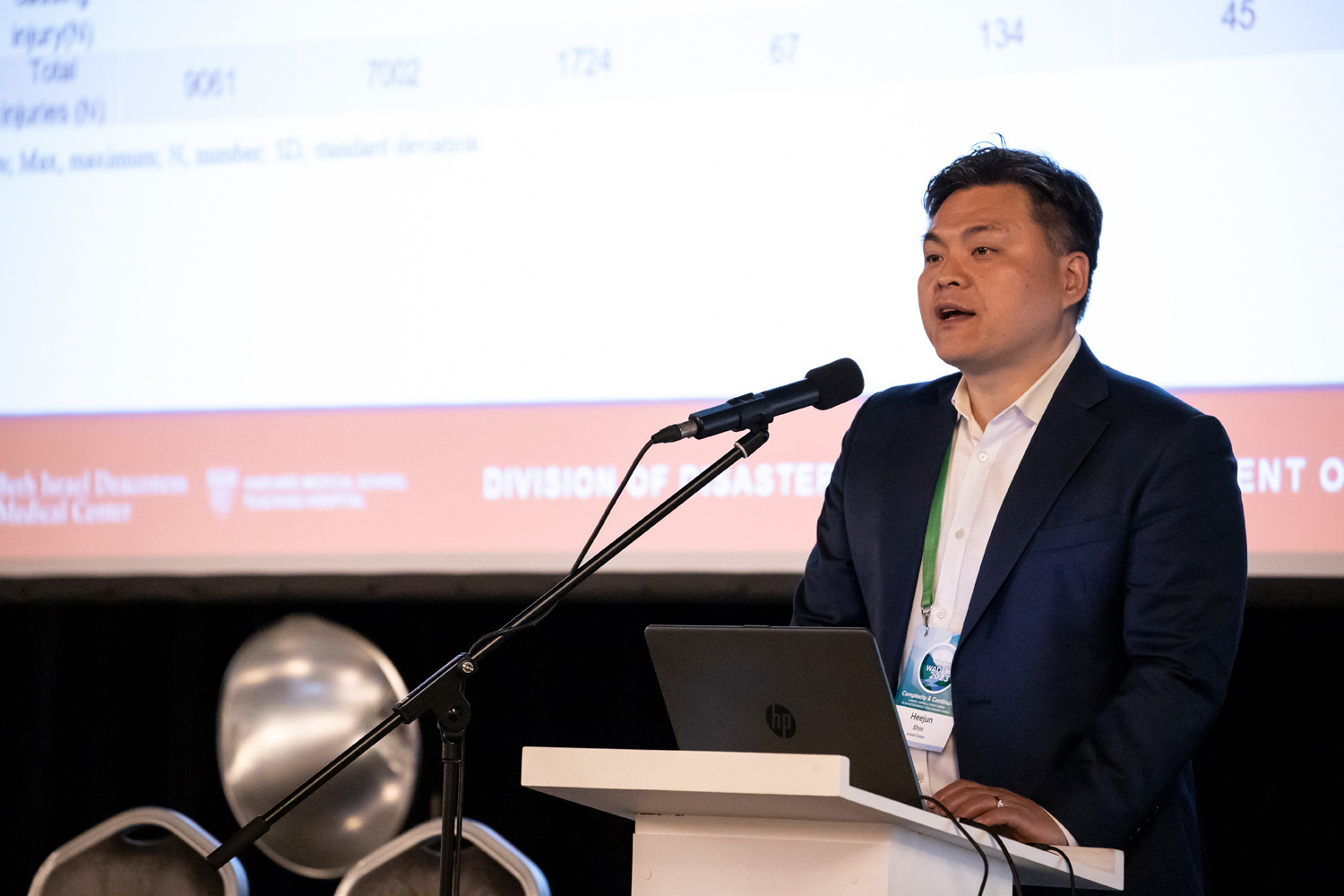
- Oral Presentation: A spoken presentation (~10 minutes), including introduction and discussion time. Presenters display the research and/or findings of their abstract in a slide presentation.
- Lightning Presentation: This oral presentation format requires presenters to make their point clearly and limit non-critical information during the presentation in the allotted five-minute time. This format is sometimes referred to as "Five Minutes, Five Slides."
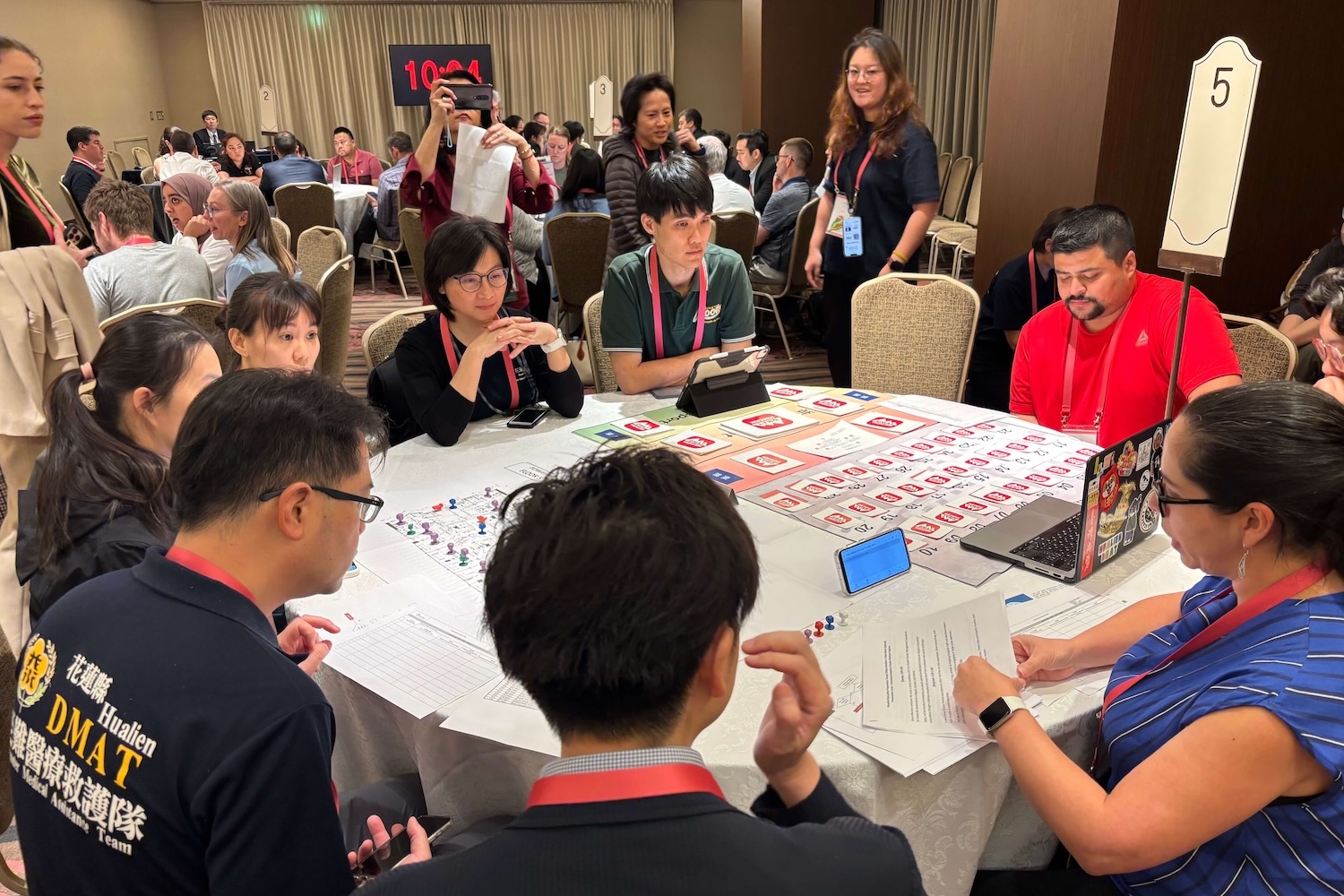
- Table Presentation: Presenters have the opportunity to present to several different small groups at a table. At timed intervals, learners will move to another table to participate in another presentation. The presenter will give the presentation to two or three different groups of learners during the session. This informal presentation style facilitates discussion, the exchange of ideas, and networking with other delegates.
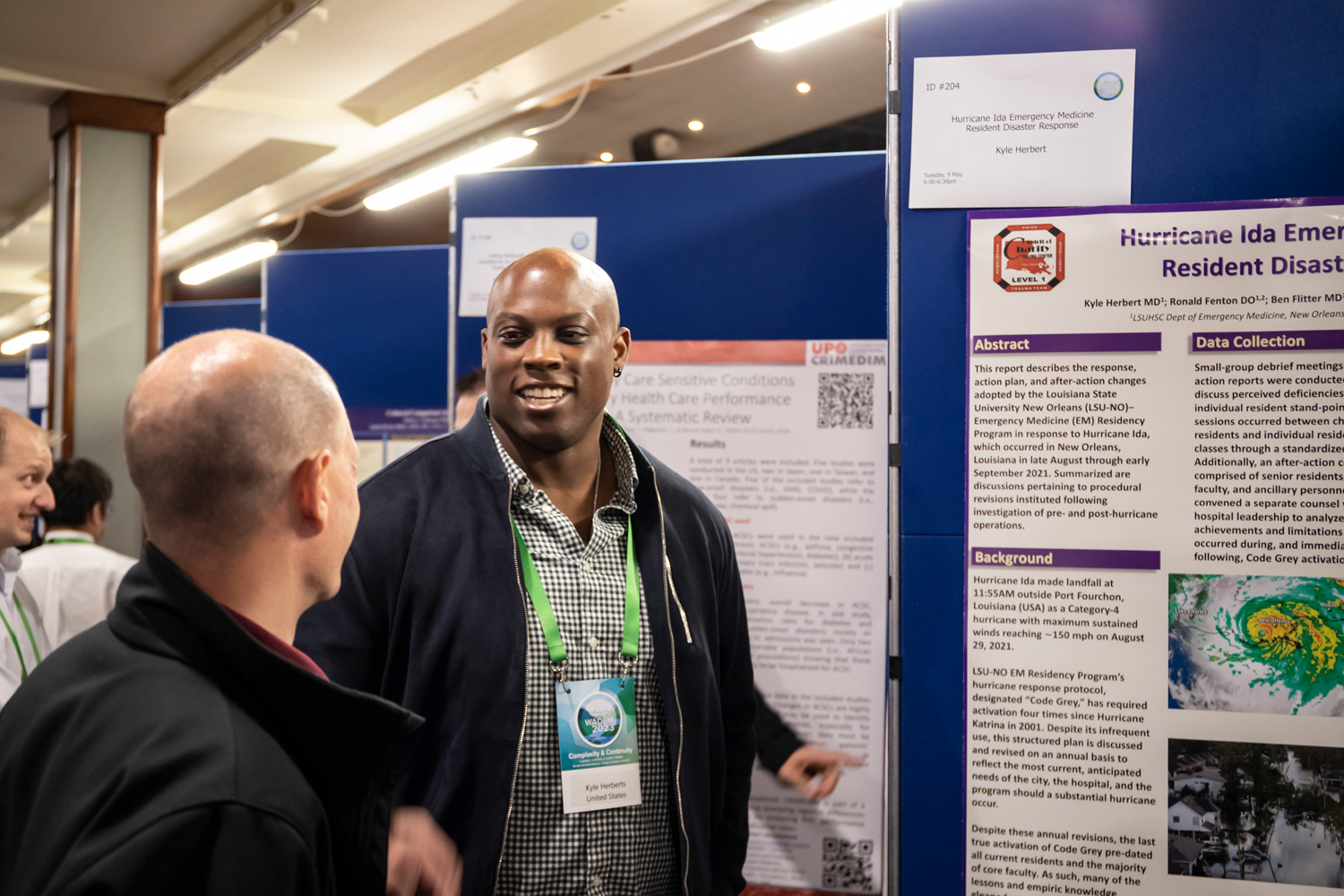
- Poster Presentation: Presenters will display a printed poster in the exhibition space. Each day of the congress will feature a dedicated poster session, during which presenters can display their posters, answer questions, and interact with delegates.
While every effort will be made to accept an abstract for the presentation type selected in the submission process, the Committee reserves the right to change the presentation type.
Abstract Submission Categories
Authors will need to select one of the following 14 categories for their abstract submission depending on which is the most applicable.
- Capacity Building
- Emergency, Critical, and Operative (ECO) Care – Acute Care Action Network
- Health Systems
- Health Workforce Development
- Hospital Burden and Business Continuity Plan
- Long-Term Disaster Planning
- Public Advocacy and Crisis Communication
- Education, Training, and Research
- Far Afield
- Aeromedical Retrieval and Evacuation
- Austere Supply Chain and Contingency Logistics
- Prehospital Care and Transport
- Resource Allocation
- Wilderness and Remote Medicine
- Global Operational and Tactical Medicine
- Attacks on Health Care Workers and Facilities
- CBRNe/HAZMAT
- Conflict Medicine and Hybrid Warfare
- Counter-Terrorism Medicine
- Humanitarian and Population Health
- Displaced Populations
- Equity
- Ethics
- Palliative Care
- Vulnerable Populations
- Integrative Health
- Dentistry
- Environmental Health
- One Health and Veterinary Medicine
- Pharmacy
- Primary Care
- Public Health
- Rehabilitation
- Transdisciplinary Collaboration
- Mass Gathering and Event Medicine
- Medical Assistance
- Civilian-Military Collaboration
- Coordination
- International Emergency Medical Teams (iEMTs)
- National Emergency Medical Teams (nEMTs)
- Mental Health and Psychosocial Support
- Responders (The Second Victim)
- Population Impact
- Worker Stress and Burnout
- Natural Hazards and Risk
- Climate Change
- Disaster Risk Reduction
- Extreme Weather
- Infectious Diseases
- New and Existing Technologies
- Diagnostics
- Forensics
- Laboratory Sciences
- Artificial Intelligence (AI)
- Data Capture and Management
- Robotics
- Drones
- Simulation
- Logistics
- Nursing
- “Outside the Box” – (Innovation and Miscellaneous)
- Pediatrics
Inquiries regarding abstracts should be sent to – alavelle@wadem.org.